
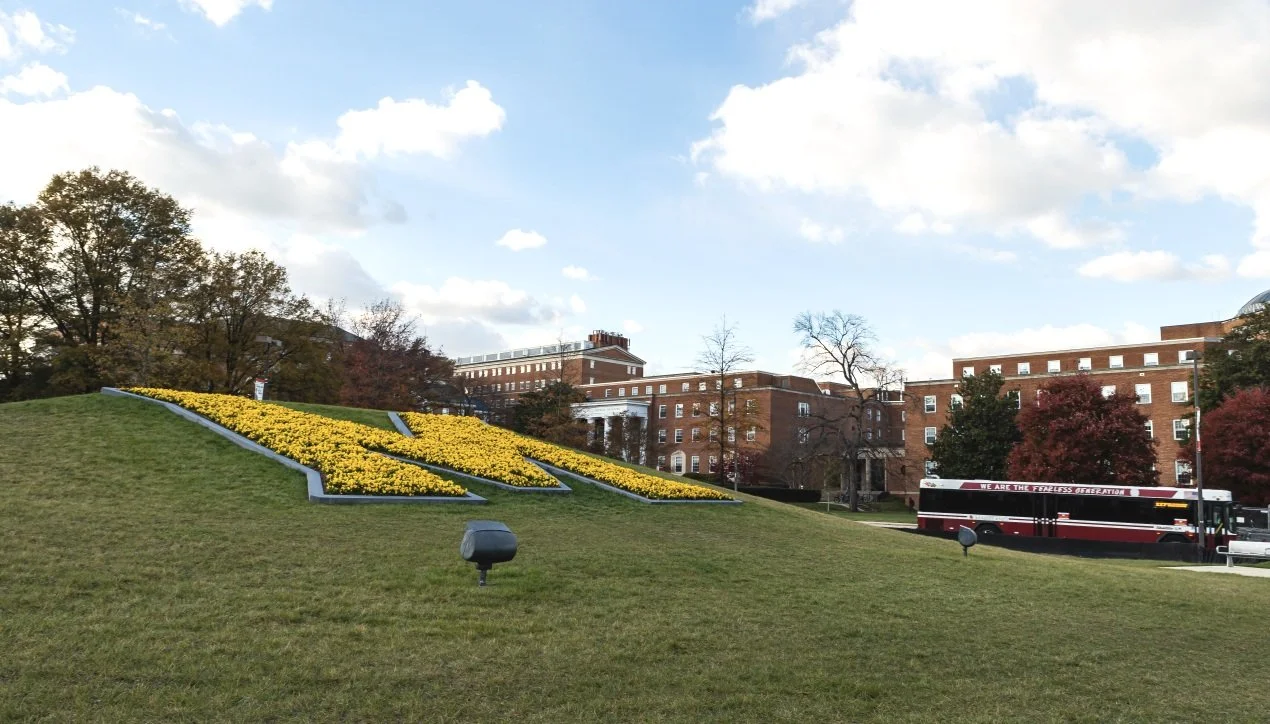
About the Discovery District
About Us
The Discovery District at the University of Maryland is the D.C. region’s emerging hub for innovation, research, and economic growth. Home to more than 60 companies and organizations, it brings together top researchers, businesses, and public-private partners to tackle global challenges. Strategically located between Washington, D.C., and Baltimore—at the planned intersection of the Green, Yellow, and Purple Metro lines—it offers unparalleled access to federal agencies, embassies, and policy institutes.
The Discovery District provides flexible workspaces, collaborative meeting areas, and a vibrant atmosphere for hybrid and remote workers, designed to be a place where you can work, connect, and thrive. The district is evolving into a dynamic live-work neighborhood, with new residential spaces and the Metro Purple Line expanding connectivity. Our goal is to make the Discovery District a place where innovation and community come together to shape the future.
The Discovery District Partnership (DDP) is dedicated to providing high-quality amenities that enhance the experience of tenants, employees, and business owners, helping them feel more engaged, productive, and satisfied. Supported by COPT Defense Properties, St. John Properties, Inc., Gilbane Development Company, and the University of Maryland Enterprise Corporation, the DDP is managed by a wholly owned subsidiary of Terrapin Development Company, ensuring a strong and collaborative foundation for growth and success.
College Park: A Legacy of Technological Advancements and Innovation
2016 - Present: Research, Development, and Education Hub
In 2016, the University of Maryland (UMD) partnered with St. John’s Properties to develop state-of-the-art R&D facilities and the College Park Academy. By 2018, the COPT-UMD alliance expanded office and lab spaces, attracting tech companies, startups, and government agencies. Today, the district thrives as a collaborative ecosystem where academia, industry, and government intersect, fostering research, education, and innovation.
1990s - 2000s: Governmental and Institutional Investments
The FDA’s relocation to College Park in 1996 and National Oceanic and Atmospheric Administration’s (NOAA) move in 2012 brought significant governmental investment to the area. These agencies leveraged proximity to academic institutions, spurring infrastructure development and solidifying College Park as a base for scientific research.
1980s: Defense and Electronics
During this period, Litton Amecom became the largest private employer in the county, focusing on defense electronics and telecommunications. Its $10M expansion underscored College Park’s growing economic importance and marked the area as a center for technological manufacturing.
1940s - 1950s: Military and Civilian Production
During WWII and the Korean War, ERCO transitioned between military and civilian aircraft production, demonstrating adaptability in meeting market demands. After ERCO’s acquisition by ACF Industries in 1954, the site was repurposed, setting a precedent for evolving uses of industrial spaces.
1930s: Foundations in Aviation
College Park emerged as a key center for aviation innovation in the 1930s, with companies like the Engineering and Research Corporation (ERCO) and the historic College Park Airport attracting early aviation pioneers, including Wilbur Wright and Glenn Curtiss. Their experiments and advancements, along with ERCO’s work on the civilian Ercoupe, established the area as a hub for aeronautical achievements and set the stage for future innovation
For more information about College Park’s rich history, visit the official College Park website.
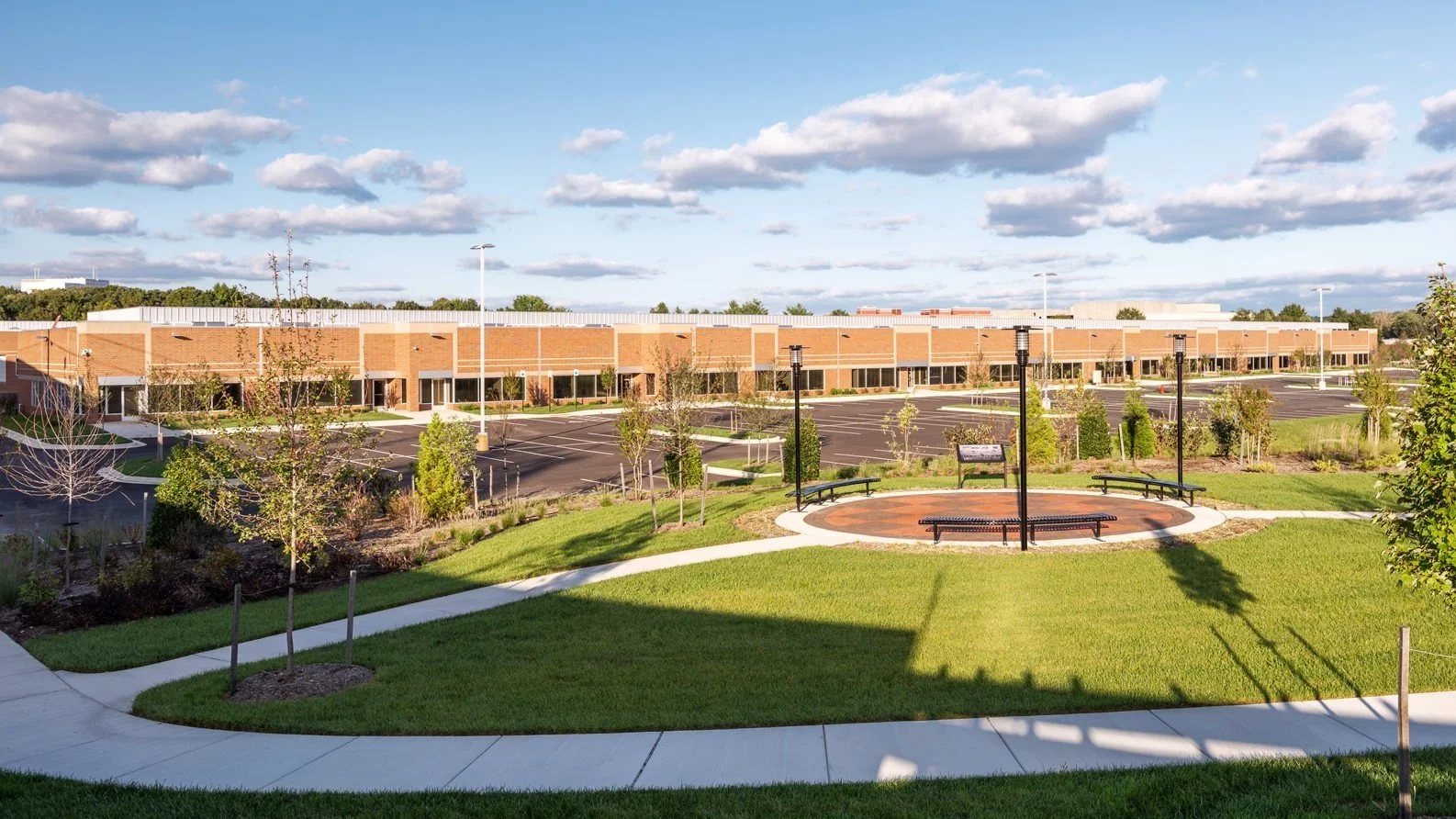
Rivertech Court Discovery District at University of Maryland

An Ercoupe flying over Washington D.C. on September 23, 1944

The Ercoupe in March 1946